
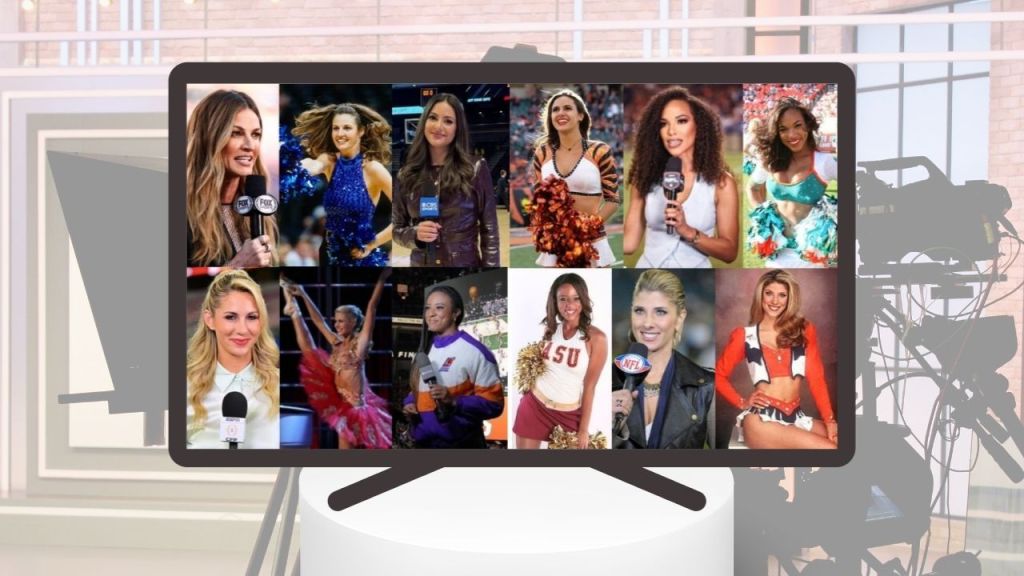
The performance skills forged in competitive dance studios and on stages are exactly what separates good on-air talent from great, so why isn’t anyone connecting the dots? Learn about how prominent women in sports media were shaped by growing up as dancers
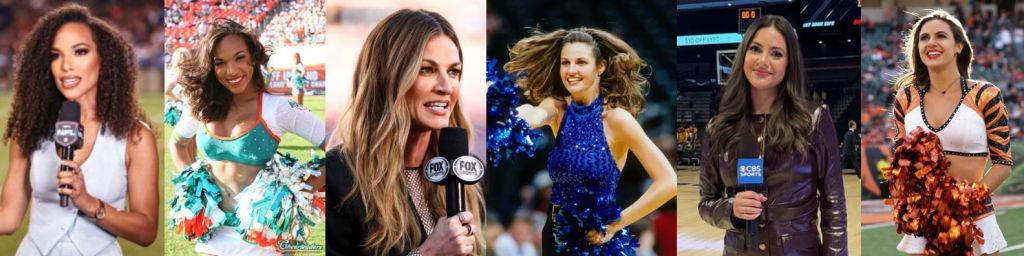
(Left to Right – MJ Acosta-Ruiz, Erin Andrews, Jaclyn DeAugustino)
There is a moment every dancer knows. The music starts, the lights shine, and every stray thought outside of dance disappears. Take a deep breath, think about staying sharp, face is on, and it’s time to perform.
You are simply there, in your body, present in a way that almost nothing else in life demands. It turns out that moment is excellent training for live television, especially in sports media.
Long before many women in sports media ever held a microphone, they were already performing in front of crowds, managing adrenaline, reading live game environments, and learning how to recover when something goes wrong without letting the audience see it. The path from dance studios, college sidelines, and professional cheer teams into sports broadcasting is far more direct than it looks.
The pattern is visible across television.
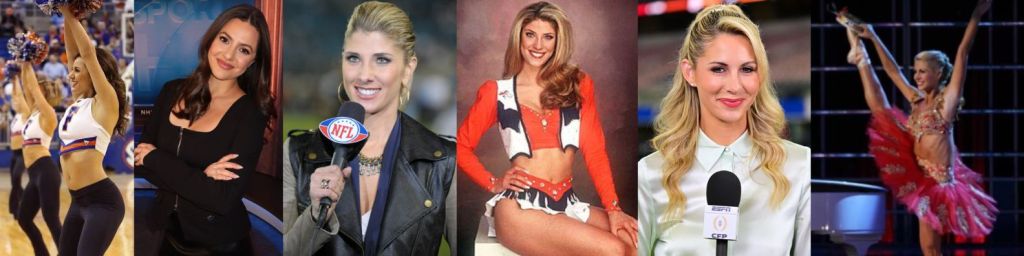
(Left to Right – Jaclyn DeAugustino, Michelle Beisner-Buck, and Laura Rutledge)
FOX Sports star Erin Andrews danced for the University of Florida Dazzlers before becoming one of football’s most recognizable sideline reporters. ESPN reporter Laura Rutledge trained seriously in ballet before anchoring NFL coverage. MJ Acosta-Ruiz came through the Miami Dolphins cheerleading world before reaching ESPN, while Michelle Beisner-Buck, who also works at ESPN as a reporter, built a similar path through the Denver Broncos cheerleaders.
The dancer-to-sports reporter connection is often overlooked because dance is still treated as decorative rather than developmental. In reality, dance teaches many of the same mechanics television demands: body control, presence, timing, composure, listening under pressure, being coachable, and understanding how to exist inside a live production.
5,6,7, 8, slowly turns into 3, 2, 1 to go live.
Jaclyn DeAugustino learned that long before becoming a studio host for CBS Sports HQ.
“My job now is making five different personalities feel comfortable enough to have a conversation,” said DeAugustino. “Dance taught me how to read people, how to see strengths, and how to make something feel cohesive even when everybody brings something different.”
Growing up in South Florida, at 10 years old, she trained in jazz (her favorite), acro, and contemporary before going on to dance for the University of Florida Dazzlers and later cheering for the Cincinnati Bengals while working on local morning television for WCPO in Cincinnati, delivering in-game reports and news updates for both the Bengals and her newsroom.
What looked like two separate careers quickly became one flow state in endurance.
“My body was like, this is insane,” said DeAugustino, recalling a routine that began at 3:30 a.m. for morning television, continued through a full studio shift, then resumed at night with Bengals practice. “I was on air by 4:30, finished work around noon, took a nap, then went to practice from seven to nine, sometimes later, and then did it all again the next day. But it taught me how to stay sharp even when you’re tired, because once you’re on, you’re on.”
DeAugustino juggled a morning news reporter role, while cheering on the Cincinnati Bengals, and eventually pitched herself to do on-air hosting for the team. Talk about multitasking to the MAX.
Endurance matters in sports media more than most viewers realize. Sideline reporting often means standing for hours before airtime, tracking game developments, listening for cues, and then delivering information instantly when called. It’s about being overly prepared to feel comfortable.
For dancers and cheerleaders, that rhythm already feels familiar because they have lived inside the pace of a game.
Lina Washington, now reporting at an NBC-affiliate, 12 News (KPNX), in Phoenix, Arizona (her hometown), says her years on the dance team at Arizona State University taught her how live sports production actually works before she ever entered a newsroom.
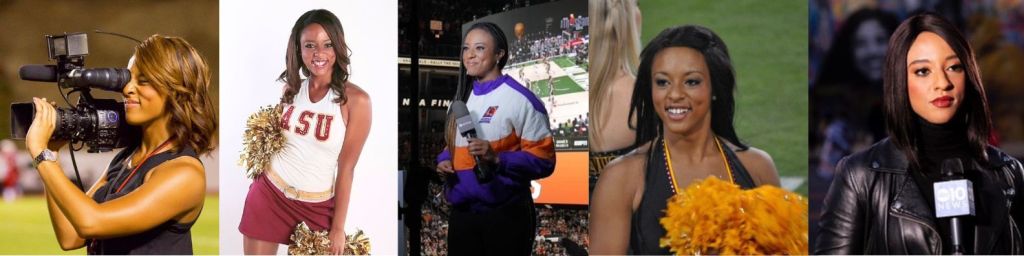
(photos of Washington as a dancer and reporter^^)
“We knew what happened during media timeouts, what song hit when, when you had thirty seconds, when you had a minute, when the read was coming,” said Washington. “It was a whole live show before I ever worked in television, and being around that gave me sideline awareness early.”
Spatial awareness matters because sideline reporting is absolutely not solely about asking questions. It is about reading a coach, player, or situation, when halftime closes, when a timeout changes everything, and when production needs you immediately.
“I’m more cognizant of my body placement like finding my angles, making sure my shoulders are back, staying open,” said Washington. “Even now, I’ll catch myself standing in third position or beveling my knee because that body awareness never leaves you.”
On television, those details are not superficial. Viewers trust people who look comfortable in the studio, on the field, or in the space they are covering.
Physical control becomes especially important when live moments turn chaotic. Technique, repetition, and paying attention to details cultivate growth.
DeAugustino remembers a rivalry basketball atmosphere so loud she could barely hear through two earpieces, yet still had to stay composed on camera.
“I just needed to take a breath and center myself and make sure I was delivering the information as best as I could,” said DeAugustino. “As a dancer, you’re used to music, bands, people moving, judges watching, lights everywhere. You learn how to focus even when there’s a million things happening around you.”
Focus on movement and storytelling through the body is similar to how reporters need to present information to the public, with endless room for corrections and criticism. Dance trains performers to absorb feedback immediately and apply it on the next run-through. If timing is off, fix it now. If posture breaks, fix it now.
Washington says that prepared her for television criticism early in her career.
“In dance, someone watches you for three minutes and tells you everything you did wrong,” said Washington. “That prepares you for a news director saying your timing was off, your tone was wrong, you pronounced something wrong, and expecting you to fix it immediately.”
Confidence may be the most crucial skill dance cultivates. A dancer learns early that confidence must appear before it is fully felt: chin up, eyes forward, commit to movement even if nerves remain.
“You don’t have to feel perfect,” said Washington. “But your audience cannot feel your anxiety. If you look tight, they notice. If you trust your body and trust your preparation, that changes everything.”
Even rejection feels familiar. In dance, two judges can score the same performance differently depending on taste, mood, or preference. Broadcasting carries the same subjectivity in reels, auditions, and hiring decisions.
“You’re never going to be everybody’s preference, and that’s okay,” said DeAugustino. “Somebody will say yes. You just have to find the people who understand what you bring.”
Both ask women to perform under scrutiny, recover quickly, trust preparation, and stay composed while being watched.
The stage changes. The spotlight shifts to a studio, or on the field, and the choreography becomes live TV.
However, the lesson stays the same: the crowd is there, the pressure is real, and when the moment comes, you show up and shine.


Leave a comment